Grade 60 versus Grade 42 confusion is behind some of the most expensive delivery rejections we have seen at Mango. A contractor orders rebar, the wrong grade arrives, the inspector rejects the pour, and the project stops while replacement steel is sourced. The fix takes 3 to 5 business days and costs the contractor labor, crane time, and the carrying cost of a stalled site. Every one of those rejections was preventable with a correct specification at order time.
This article covers what NMX-B-294 requires, how to read rebar markings, and the specific cases where Grade 60 is mandatory under Mexico City's Reglamento de Construcciones.
What NMX-B-294 Actually Covers
NMX-B-294 is the Mexican standard for deformed steel reinforcing bars. The most recent revision specifies yield strength grades, elongation requirements, and marking requirements that make the grade identifiable from the bar itself. The two grades that matter for residential and low-rise commercial construction in Mexico City are Grade 42 (420 MPa minimum yield) and Grade 60 (420 MPa minimum yield by old designation, now aligned at 420 and 520 MPa in the updated standard — more on this below).
The grade number historically referred to the minimum yield strength in ksi (kilopounds per square inch). Grade 42 = 42,000 psi = approximately 290 MPa. Grade 60 = 60,000 psi = approximately 415 MPa. The updated NMX-B-294 aligns more closely with ASTM A615 designations: Grade 40, Grade 60, and Grade 75 in the US market correspond roughly to the Mexican 280, 420, and 520 MPa designations under the new standard.
In practice, when a structural engineer in Mexico City specifies "varilla corrugada Gr. 60" or "acero de refuerzo fy=4200 kg/cm2" — the common way yield strength is expressed in Mexican engineering practice — they mean a bar with a minimum yield strength of 420 MPa. This is what most major distributors stock as their default grade. Grade 42 (290 MPa / fy=2900 kg/cm2) is lower strength and is still available from some distributors but is not specified for seismic zone applications in CDMX without explicit engineering justification.
Mexico City's Seismic Zone Requirements
Mexico City sits in Seismic Zone D — the highest seismic risk classification in Mexico's design codes. The NTCS (Normas Técnicas Complementarias para Diseño por Sismo) applicable under the Mexico City Reglamento de Construcciones imposes stricter ductility requirements on reinforced concrete structures than those applicable in lower seismic zones.
For structural elements in seismic zone D buildings — columns, beams, shear walls, and moment frames — the NTCS requires minimum Grade 60 (fy=4200 kg/cm2) steel with specific ductility and elongation properties. Using Grade 42 in a column in a seismic zone D building is not just a specification error; it is a structural code violation that can cause the structural engineer's certification to be withdrawn and the building permit to be suspended.
This is the reason that "just order rebar" is the wrong approach. The structural drawings will specify the grade, and that grade is determined by the seismic zone classification of the building typology. If your project is a 4-story or taller residential building in Mexico City, Grade 60 is almost certainly required for all principal structural elements. If your project is a single-story addition to an existing structure, check the structural drawings rather than assuming.
How to Read Rebar Grade Markings
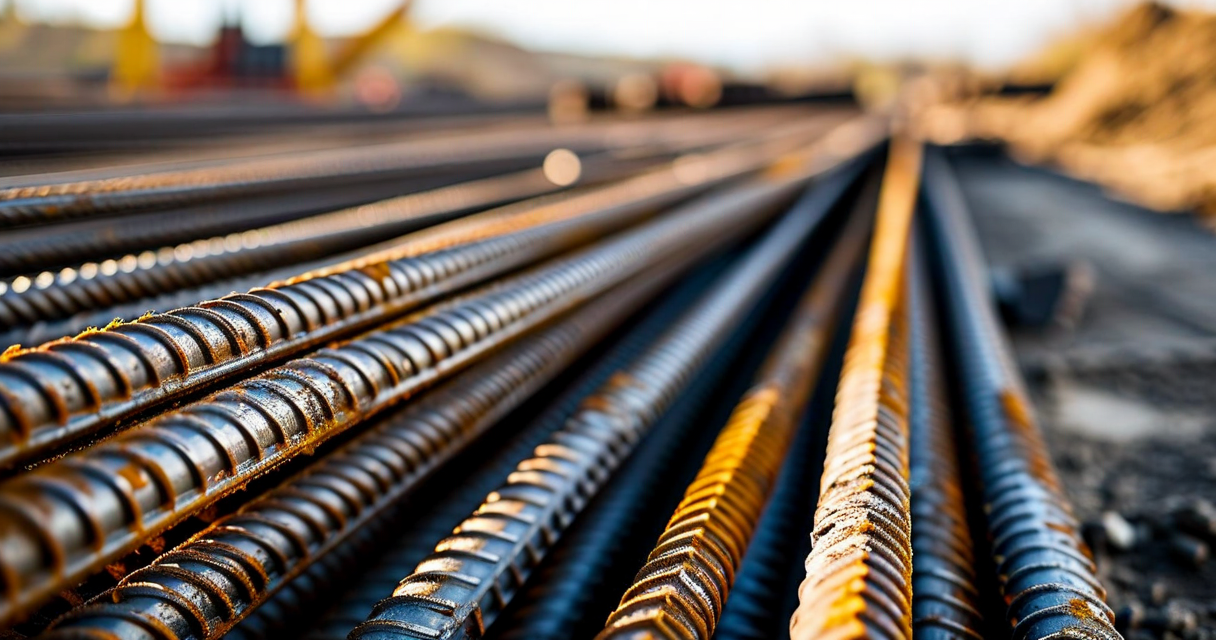
Every rebar bar meeting NMX-B-294 requirements must be marked along its length with identifying information. The markings are rolled into the deformation pattern of the bar and are not paint or labels that can wear off. Here is what to look for:
The first character in the marking sequence identifies the producing mill — typically a letter or a combination of letters and numbers. The second element identifies the bar size in the metric designation (the number corresponds to the nominal diameter in millimeters, so #6 is 6mm, #25 is 25mm — note that Mexican and US bar size numbering differs; Mexican #25 corresponds roughly to US #8). The third element identifies the grade or yield strength class.
For Grade 60 (fy=4200 kg/cm2 / 420 MPa), the grade marking is typically a single longitudinal line on the bar — one continuous line rolled into the surface. For Grade 40/42, the bar has no grade mark or a different marking pattern. Some mills use a number stamp: a "4" for 420 MPa and a "3" for lower grades. Check the mill's marking legend before the first delivery if you are sourcing from a distributor whose marking convention you have not worked with before.
The practical site check: hold the bar under daylight and look along its length. The longitudinal lines (not the transverse deformations) are the grade indicators. One continuous line = Grade 60 in most Mexican mill marking conventions. If there is no longitudinal line and the bar is not otherwise marked, it may be a lower grade or a non-certified bar. Reject it.
The Most Common Ordering Error and How It Happens
The most common rebar ordering error at Mango is a verbal or informal order placed without a written specification. A foreman calls a distributor, asks for "varilla del 3/8," and receives Grade 42 because that is the grade the distributor has in stock at the best price. The structural drawings said Grade 60, but no one checked the drawings before calling.
The fix is straightforward: when placing any rebar order, include the bar designation (diameter), the grade (fy=4200 or Grade 60), and the applicable standard (NMX-B-294) in the written purchase order. Mango's order form includes a specification field where this information is captured and passed to the supplier. A supplier who delivers Grade 42 against a written Grade 60 specification is in breach of the purchase order and is responsible for the replacement delivery cost.
A verbal order that only specifies the bar diameter leaves the grade determination to the distributor, who will typically deliver whatever grade is in stock. This is not negligence on the distributor's part — they delivered what was ordered. The specification gap is on the procurement side.
Rebar Sizes Used in Mexico City Residential Construction
Standard residential construction in Mexico City uses a fairly predictable range of rebar sizes. Foundation slabs and mat foundations typically use #12 to #16 bars (12mm and 16mm diameter) at 150 to 200mm spacing. Columns in 3 to 5 story buildings typically use #16 to #25 (16 to 25mm) longitudinal bars with #8 to #10 ties. Beams in the same building type use #16 to #20 longitudinal bars.
Seismic stirrups — the closely-spaced ties at beam-column joints required by NTCS — are almost always #8 or #10 at 75mm spacing in seismic zone D construction. These small-diameter bars are often overlooked on material orders because they seem like a minor item. They are not. A seismic zone inspection that finds incorrectly spaced or under-sized stirrups fails the structural inspection, and rebar already in a cast column cannot be corrected.
The stocked bar sizes at most CDMX distributors are #6, #8, #10, #12, #16, #19, #25, and #32. Some specialty distributors also stock #38 and #50 for larger commercial projects. Lead times for non-stocked sizes can be 10 to 15 business days from a rolling mill. If your structural drawings specify a non-standard bar size, check availability before finalizing the construction schedule.
Seismic Grade Requirements vs. Economic Grade Temptation
Grade 42 rebar typically costs 15 to 20% less per ton than Grade 60. On a project using 40 tons of rebar, that is a cost difference of approximately MXN 60,000 to MXN 90,000. That saving is real, and it explains why some contractors try to substitute Grade 42 in applications where Grade 60 is specified.
The structural engineer will reject this substitution during the reinforcement inspection, which is mandatory before any concrete is poured in Mexico City. If Grade 42 passes inspection because the inspection was not rigorous and the building subsequently fails seismically, the liability exposure far exceeds any material cost saving. CDMX has mandatory seismic inspections precisely because the 1985 and 2017 earthquakes demonstrated what happens when structural standards are not followed.
The better cost-reduction lever is volume: ordering the full project rebar quantity in one purchase order rather than phase by phase. Distributor pricing for rebar has volume break points — typically at 5, 10, and 20 ton increments. A single-order commitment for the full project quantity will consistently achieve better pricing than multiple small orders. On Mango, consolidated rebar orders also qualify for Mango trade credit, which preserves your cash while you receive the full-project quantity pricing.
Receiving and Storing Rebar at the Site
Rebar should be stored off the ground on wooden supports at minimum 150mm elevation to prevent ground contact and surface rust that affects bond strength. Keep it covered if the site is near a chloride exposure source (coastal sites, road salt in colder northern cities). In Mexico City, short-term outdoor storage without cover is acceptable for 2 to 4 weeks, but bundled bars should be inspected for surface scale before bending and placing.
Light surface rust on deformed rebar is generally acceptable and does not affect bond performance. The NMX-B-294 standard considers light surface rust within tolerance. Heavy scale that flakes off when the bar is tapped is not acceptable — it reduces the effective cross-section and must be cleaned before use or rejected. Your structural inspector will evaluate this during the reinforcement inspection.
On delivery, verify that every bundle is tagged with the mill certificate, which should include the heat number, bar size, and mechanical test results confirming the yield strength and elongation. Request the mill certificate with the delivery. If a supplier cannot provide a mill certificate, you cannot verify that the bar meets NMX-B-294. This is grounds for rejection, and Mango's supplier standards require mill certificates for all structural steel deliveries.
Placing the Order Correctly Through Mango
When placing a rebar order through Mango, use the structured product fields to specify: bar size (nominal diameter in mm), grade (420 MPa / fy=4200 / Grade 60), standard (NMX-B-294), and total quantity by bar size. The order confirmation echoes these fields back to you for verification before the order is transmitted to the supplier.
If the structural engineer has issued a cutting list — a table of bar lengths and quantities for each element — upload the cutting list to the order. Suppliers who offer pre-cut and bent rebar can prepare bars to spec before delivery, reducing waste and on-site labor. Not all distributors offer this service, but the larger CDMX distributors and specialty fabricators do. Mango can connect you to suppliers offering bent-and-bundled rebar delivery on request.
The correct rebar order is not difficult — it requires a minute with the structural drawings to confirm the grade and sizes, and another minute to enter the specification in the order. The expensive errors come from skipping that two minutes. The goal is that your inspector sees exactly what the structural drawings specified when they arrive for the reinforcement inspection, and the pour proceeds on schedule.